
Iowa County Traffic Court Records
Iowa County Traffic Court Records are handled through the courthouse clerk office and the county's traffic-specific public guidance. If you need to check a citation, understand a plea option, confirm a payment deadline, or look up the right department, Iowa County gives you a direct route. The clerk office keeps the record side of the case. The traffic FAQ explains how the citation process works. The courthouse page shows where the offices are located. The statewide law library and WCCA fill in the public access side. That makes Iowa County a good example of a county where the record path is detailed enough to follow without guessing.
Iowa County Traffic Court Records Overview
Iowa County Traffic Court Records Office
The Iowa County Clerk of Courts office is the main place to start for Iowa County Traffic Court Records. The official department page places the clerk office in the Iowa County Courthouse at 222 N. Iowa Street in Dodgeville and gives the direct phone number as 608-935-0395. The same page also lists the child support, county clerk, district attorney, drug treatment court, OWI, register of deeds, register in probate, and treasurer contacts. That is useful because a traffic record can sit next to other county work, and the county makes those office numbers easy to find.
The state law library page adds what the clerk actually does. It says the clerk of courts provides court forms and records for civil, criminal, family, traffic, and ordinance cases. It also handles the civil judgment and lien docket, online fee payments, and jury information. That is the heart of the county record function. A traffic citation may look small, but the clerk office is the place where the file, the docket, and the public copy path come together. That is why the office contact matters so much in Iowa County.
The statewide clerk contact directory confirms the county entry and lists Lia Leahy as the Iowa County Clerk of Circuit Court at 222 N. Iowa Street in Dodgeville with the same phone number. That gives the public one more official place to verify the contact before they call or visit. It is especially useful when a traffic matter needs a confirmed office number rather than an informal listing. The county courthouse page also says the Clerk of Courts office is inside the courthouse, which helps when you are trying to find the right floor or entrance.
For Iowa County Traffic Court Records, the office sources line up cleanly. The clerk office is the file holder, the courthouse page gives the location, and the statewide directory confirms the current official contact. That keeps the search grounded in county and state sources instead of leaving the public to guess where the file lives.
Search Iowa County Traffic Court Records
The Iowa County traffic FAQ is the most practical guide for the search itself. It explains that the date on the citation is the initial appearance date, not the trial date. That is a common point of confusion, so the county puts it in plain language. The FAQ also explains that you may plead not guilty by mail or fax before the court date, and it gives the mailing and fax information for the Clerk of Court office. That means the county's traffic search process is tied directly to the clerk office and the court schedule.
The FAQ also tells you how the search and plea process connects to jury rights. If you want to preserve a jury trial, you must submit a written demand and post $36 in jury fees within 10 days of the not-guilty plea or initial appearance, whichever comes first. That detail matters because it shows the county treats traffic cases as real court matters, not just paper citations. It also means the search process is more than a lookup. It is the first step in deciding how to respond to the ticket.
Iowa County's FAQ also lays out the speeding point schedule and the double-point rule for probationary license holders. Those facts matter because a search may not end with the case number. It may end with a decision about a plea or payment based on the consequences. The county also says that a speeding ticket payment is due within 30 days after the court date, which helps the public understand the timeline before the deadline arrives.
For public access, WCCA remains the statewide search tool. It uploads case information hourly, takes a nightly maintenance break, and may show less detail for backloaded cases. That makes the public search more useful when paired with the clerk office and the traffic FAQ. If a case is in the system, WCCA helps you confirm it. If you need to know the local process, the county FAQ fills in the blanks. That is the best way to work Iowa County Traffic Court Records.
The county law library page also supports the search by linking traffic citation rights and responsibilities, court forms, and legal aid. That keeps the process local and official from the first step to the last.
Iowa County Traffic Court Records Payments
Iowa County's payment rules are detailed, and they matter for anyone handling Iowa County Traffic Court Records. The traffic FAQ says citation payments are due within 30 days after the court date. In person, the county accepts cash, check, or money order, but not cards. You can also pay by mail or online at wicourts.gov after the court date. That gives the public a few payment routes, but the county keeps the in-person rule narrow so that the payment is made in the right way and on time.
The same FAQ explains what can happen if payment is not made. The county says failure to pay can lead to civil judgment, statutory interest, tax refund intercept, and driver's license suspension. That is serious enough that the payment page becomes part of the case record itself. The county also lists a typical minimum speeding ticket breakdown, which shows how the forfeiture, penalty assessment, court costs, justice information fee, jail assessment, court support fee, and crime lab or drug assessment add up. That breakdown helps the public understand why the total is larger than the base forfeiture.
The county clerk office and the traffic FAQ work together on payment issues. The clerk office handles the records and the county payment process, while the FAQ tells you how the ticket itself works. That combination is useful because a person often needs both pieces at once: the amount due and the correct office. If the citation has not yet been resolved, the county's directions give the public a fair chance to pay the right amount before the case grows into something more complicated.
The law library page also helps because it points to the clerk, the sheriff, the family court commissioner, the victim/witness office, and legal aid. That matters when a traffic payment issue turns into a broader court matter or when the person needs help understanding the process. Iowa County keeps the support channels close to the records source, which is exactly what you want in a traffic records page.
For Iowa County Traffic Court Records, the payment route is clear: use the clerk office and FAQ together, follow the deadline, and keep the case number and court date in view. That prevents the common mistakes that happen when someone pays too early, pays the wrong office, or ignores the citation timeline.
- Confirm the court date before making a payment.
- Use cash, check, or money order in person.
- Pay online only after the court date.
- Watch the 30-day deadline and the cited consequences.
That keeps the payment process tied to the actual traffic case.
Iowa County Images
The clerk office page shows the main county department for Iowa County Traffic Court Records: Iowa County Clerk of Courts.
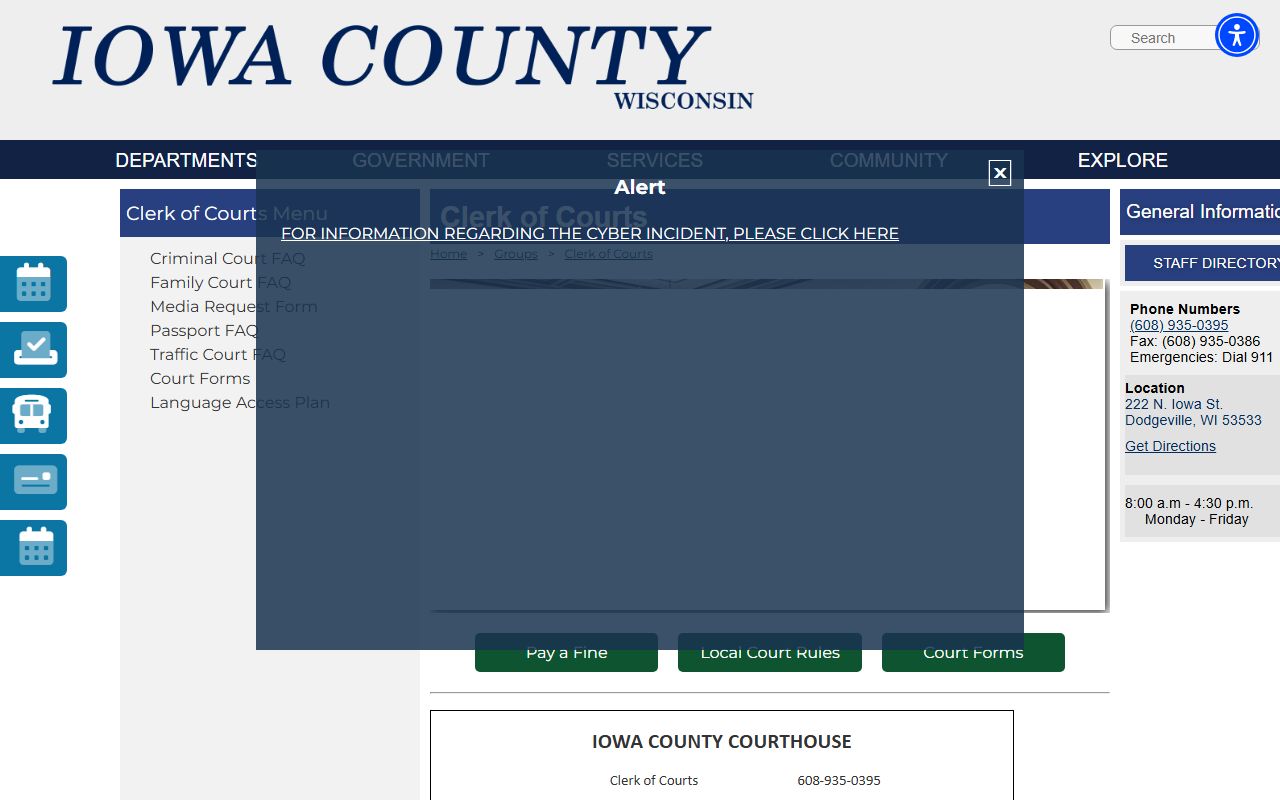
That image matches the office that handles the case records and the public copy path.
The traffic FAQ page shows the county rules that shape a citation response: Iowa County traffic court FAQ.
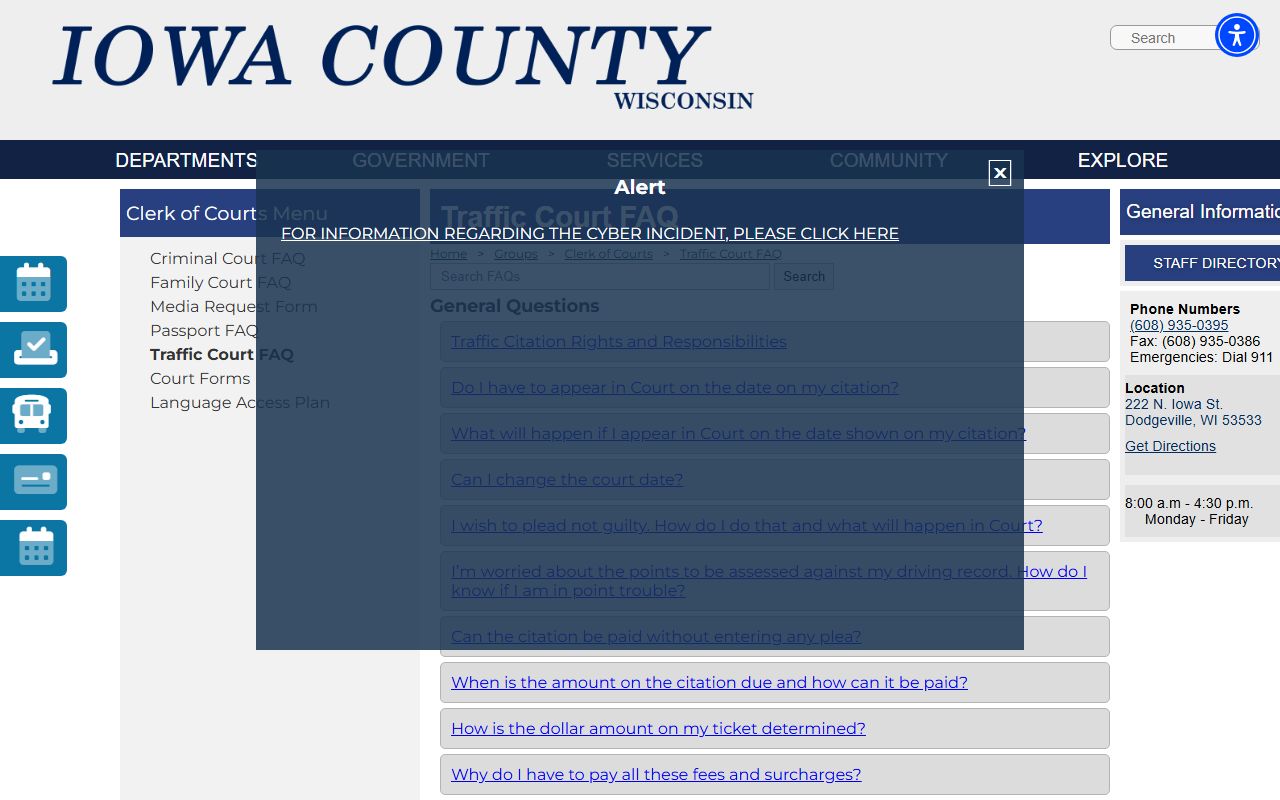
That image fits the county's traffic rules because it is the guide that explains pleas, points, and payment timing.
The courthouse page shows the physical location for the circuit court and clerk office: Iowa County Courthouse Information.
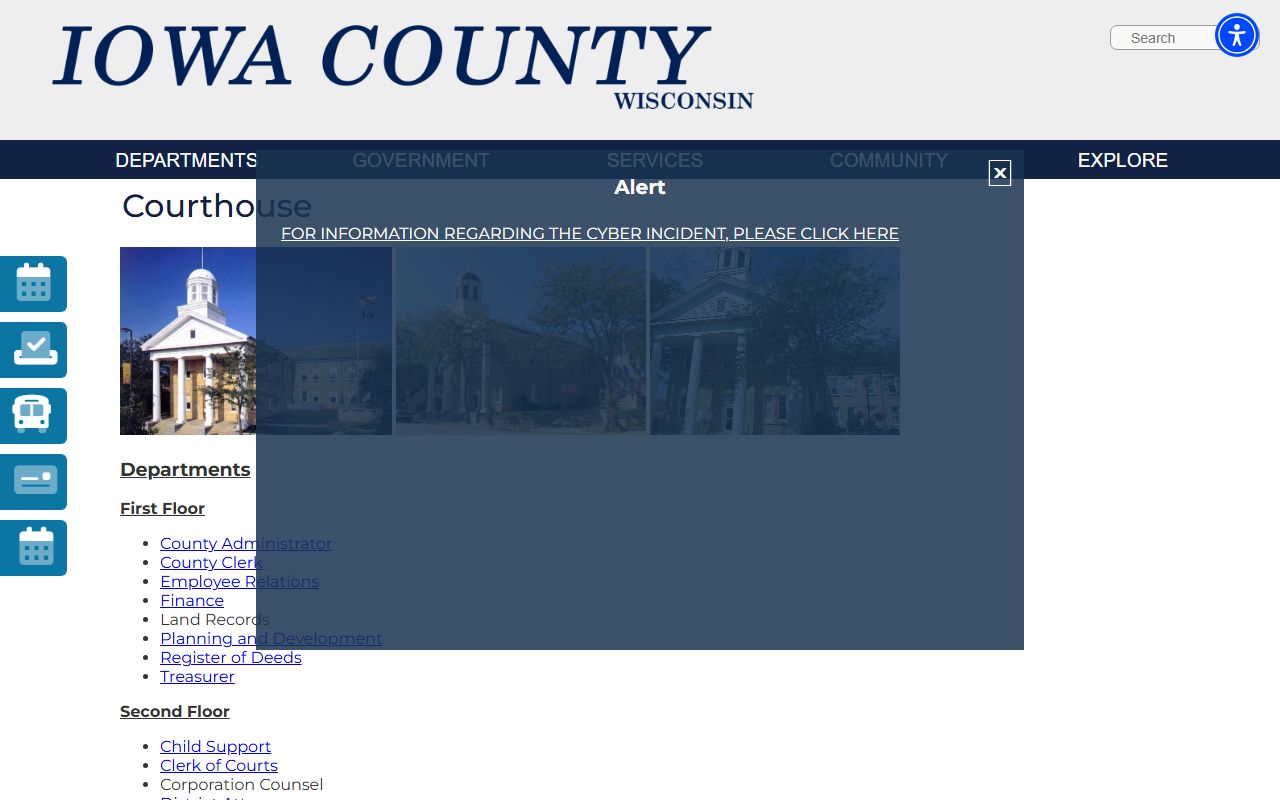
That image gives the courthouse context that helps when you need the right building or floor for a records visit.
The state law library page gives the broader county court and legal aid network: Iowa County Legal Resources.
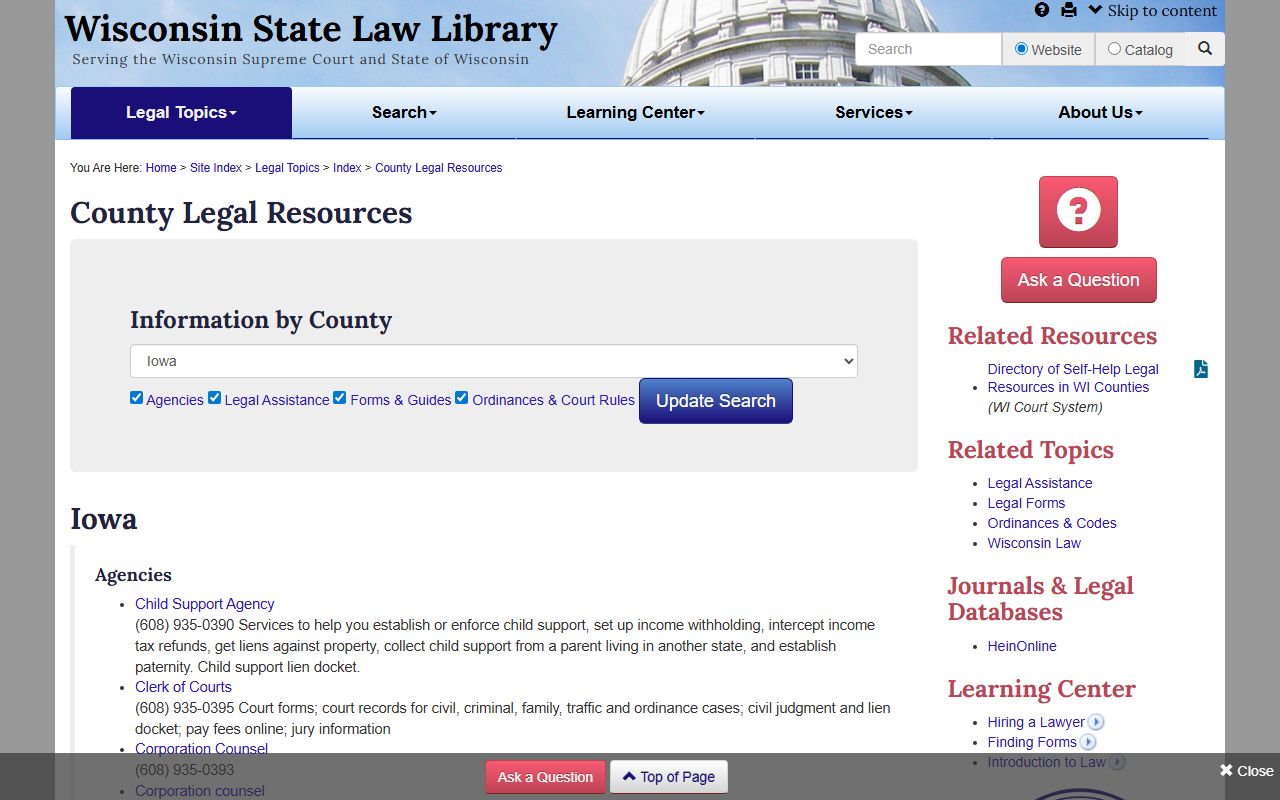
That image works because the law library page ties the clerk, sheriff, legal aid, and court forms together in one official source.
Iowa County Records and Contacts
Iowa County's official pages make the contact map easy to use. The clerk page lists the courthouse address, the clerk of courts phone, and the surrounding county offices. The law library page adds the clerk of courts number, the county clerk, the family court commissioner, the register in probate, the sheriff's department, and legal aid contacts including Family Advocates, Free Legal Answers Wisconsin, Iowa County Victim/Witness Assistance, Legal Action of Wisconsin, and the State Bar Lawyer Referral Service. That is a full county support network, and it helps when a traffic record links to something larger than the citation itself.
The county also lists forms and guides linked to traffic citation rights and responsibilities. That is useful because a traffic search often becomes a decision about a plea, a payment, or a court appearance. The county does not hide that part of the process. It gives the public the materials to understand what a citation means and what a response can do. That is why the Iowa County record pages feel more complete than a bare address listing.
The statewide clerk contact directory confirms the current county clerk entry and lists Lia Leahy as the clerk of circuit court. That matters because it gives the public a second official source for the office details. When you are using a traffic records page, that second confirmation can help you feel sure you are calling the right place or mailing the request to the right address.
Iowa County also lists additional county offices like the district attorney and drug treatment court. Those are not traffic records by themselves, but they matter when a citation connects to a broader court issue. The county keeps those contacts close enough to the clerk page that a traffic records user can move from one office to another without starting a fresh search.
Iowa County Court Access
Iowa County court access starts with the courthouse itself. The courthouse page places the Clerk of Courts inside 222 N. Iowa Street in Dodgeville and says the courthouse has first floor, second floor, and lower level office space. That helps when you need to find the right office in the building instead of just the street address. The clerk office page and the courthouse page work together to show both the department and the building that contains it.
WCCA gives the statewide public record layer. The county traffic FAQ gives the local procedure. The clerk office gives the case records and payment contacts. When those are used together, a traffic matter is easier to manage because you can see the public record, the county process, and the physical office in one chain. That is the best way to handle Iowa County Traffic Court Records without getting lost in separate pages.
The county law library page also fits the access picture because it links the forms, rules, and support contacts that help a person act on the record. If the issue is not just a citation but a court form or a legal aid question, the page gives you the next step. That keeps the access route local and practical.
For a traffic case, that means you can check the record, read the rules, and decide how to respond without leaving the county's official sources. Iowa County makes that path clear, and that is what a good records page should do.