
Crawford County Traffic Court Records
Crawford County Traffic Court Records move through a clerk office that handles the case file, the court obligations, and the public side of the search. If you need to find a traffic matter, pay a citation, check eFiling rules, or confirm who to call, Crawford County gives you a direct path. The county court pages are practical. They tell you where the office is, when it is open, and how the record work runs. That makes Crawford County easier to navigate than a generic court site, because the county pages are built around the real work of the office.
Crawford County Traffic Court Records Overview
Crawford County Traffic Court Records Office
The Crawford County Clerk of Court page is the starting point for Crawford County Traffic Court Records. The office says its mission is to effectively and efficiently facilitate the administration of justice. In practice, that means record keeping for all cases, collecting money on court-ordered obligations, and managing the jury system. Those are the jobs that sit behind a traffic file. If you want the county record, the clerk office is the right place to begin.
The office contact details are clear. Crawford County lists phone 608-326-0209 and fax 608-326-0288, with office hours Monday through Friday from 8:00 a.m. to 4:30 p.m. The clerk contact directory also names Holly R. Tanner as the clerk and places the office at 220 N Beaumont Road, Prairie du Chien, WI 53821-1405. That gives you both a phone and a physical address, which is useful when a traffic matter needs a direct call or an in-person visit. The page also lists office staff by name: Holly R. Tanner, Nicole Asleson, Darci Knapp, and Jaiden Colsch.
The clerk page is also plain about legal advice. Staff cannot give it, and the page points people to the Lawyer Referral Service at 1-800-362-9082. That matters because it keeps the records role separate from the legal role. If you need a copy, a docket trace, or a payment answer, the clerk office can help. If you need legal strategy, you need another source. Crawford County keeps that line visible, which makes the office easier to use correctly.
The same page also makes one more useful point. It presents the office as the place where justice administration is facilitated, not just stored. That means a traffic case is handled as part of a working court system, not a dead file. If you are trying to read a citation or find the next step, that mindset helps. The clerk office is not just a records shelf. It is the administrative engine behind the county court record.
Search Crawford County Traffic Court Records
The Crawford County circuit court page gives the search context. It says the court serves the public, the legal profession, law enforcement, and local, state, and federal agencies in criminal, traffic, small claims, civil, and family cases. That tells you the county court structure is broad enough to handle traffic records without pushing you out to another office. The same page also says the staff are prohibited from giving legal advice. So the court page helps you find the record and understand the process, but not build a legal argument.
For public record work, the most useful thing is knowing where the court page sits in the chain. The clerk office keeps the file. The circuit court page shows the services. Together they tell you the county is organized around actual record handling. That is important when you need to tell the difference between a paper citation, a docket entry, and a case that has moved farther into court. Crawford County keeps all of that in one local system.
The county payment page adds a practical search step because it sends people to the Wisconsin court payment site and tells them to use only the first and last name plus Crawford County. That is a narrow search rule, and it is useful because it helps the county match the right person to the right obligation. If the payment site can find the case with limited data, then you know the county is relying on the same court record network behind the scenes.
That is why Crawford County Traffic Court Records are easiest to handle when you think in layers. The clerk office handles the file. The circuit court page tells you what kind of case the county handles. The payment page points to the public online record side. Each page does a different job, and together they make the search path much cleaner.
If a traffic matter is active, the county pages also help you keep track of the right office hours and the right phone number. That can matter more than a search box when a citation is due or a case needs a call before the end of the day.
Crawford County Traffic Court Records Payments
The payment page is one of the most useful Crawford County Traffic Court Records sources because it tells you exactly how to handle an obligation. In person, you can pay at 220 N Beaumont Road in Prairie du Chien. The page also mentions a drop box on the Wacouta Avenue side of the building, and it gives a mailing address at the same location. That makes it simple to choose a payment path that fits your day instead of forcing you into one method.
For online payment, Crawford County directs users to the Wisconsin court payment site and says to use only the first and last name along with Crawford County. That is a careful instruction. It keeps the search narrow enough for the system to find the right obligation. The page also warns that failure to pay may lead to arrest or commitment to jail, judgment, tax intercept, income withholding, and state debt collection. Those consequences make the payment page more than a convenience page. It is part of the court record trail.
The payment instructions are also useful because they show the county has multiple ways to receive money on a court-ordered obligation. A person who can pay in person can do that. A person who needs to mail the payment can do that too. A person who wants to pay online has a separate path. That flexibility matters in traffic cases, where timing can be tight and the payment itself may be the only issue left in the file.
When you are trying to settle a traffic obligation in Crawford County, the payment page is the safest place to begin. It gives the address, the drop box, the mailing route, and the online route without making you guess which one is accepted. That makes it easier to keep the case moving and avoid unnecessary follow-up calls.
Crawford County Filing Rules
Crawford County's eFiling page is especially useful because it tells you what counts, when it counts, and how the county handles conversion requests. The page says eFiling is mandatory for CT, TR, FO, and many other case types. That includes traffic matters. It also says documents that need a court official's signature must leave a blank three-inch top margin on the first page and a half-inch top margin on later pages. Those are small rules, but they matter because a filing can be rejected if the page layout is wrong.
The timing rule is equally clear. Filings submitted by 11:59 p.m. Monday through Friday count for that day. That can make a real difference when a deadline is close. The page also says conversion requests go through the clerk at 608-326-0209 and may take several days. That tells you the county does not treat conversion as instant, so you need to plan ahead. If you are converting older paper material into the electronic system, that timing matters as much as the form itself.
The eFiling page also points people to the statewide eCourts information page at wicourts.gov/ecourts/index.htm. That link matters because it ties the county practice back to the statewide system. Crawford County is not making its own separate rules in a vacuum. It is using the Wisconsin eCourts structure, then applying county-level instructions to the filing process. That is exactly the kind of detail a traffic records page should preserve.
For people who are new to electronic filing, the Crawford County page is direct and practical. It tells you the case types, the margin rule, the deadline, and the conversion contact in one place. That makes it easier to prepare a filing correctly and reduces the chance that a traffic case gets delayed for a formatting mistake.
Crawford County Images
The clerk page shows the office that keeps the county record: Crawford County Clerk of Court.
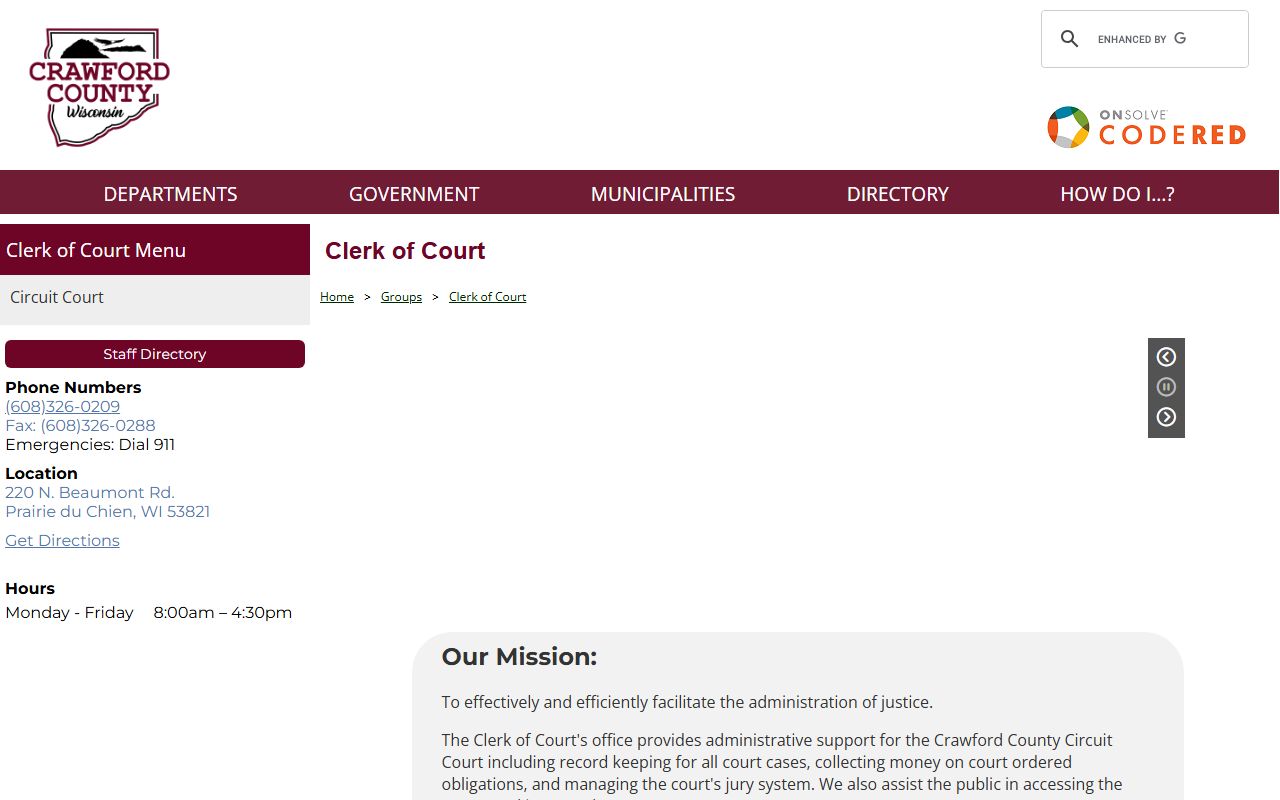
That image matches the office that handles records, court obligations, and jury work in Crawford County.
The payment page shows the county's payment routes for court obligations: How to Pay a Fine, Forfeiture, or Assessment.
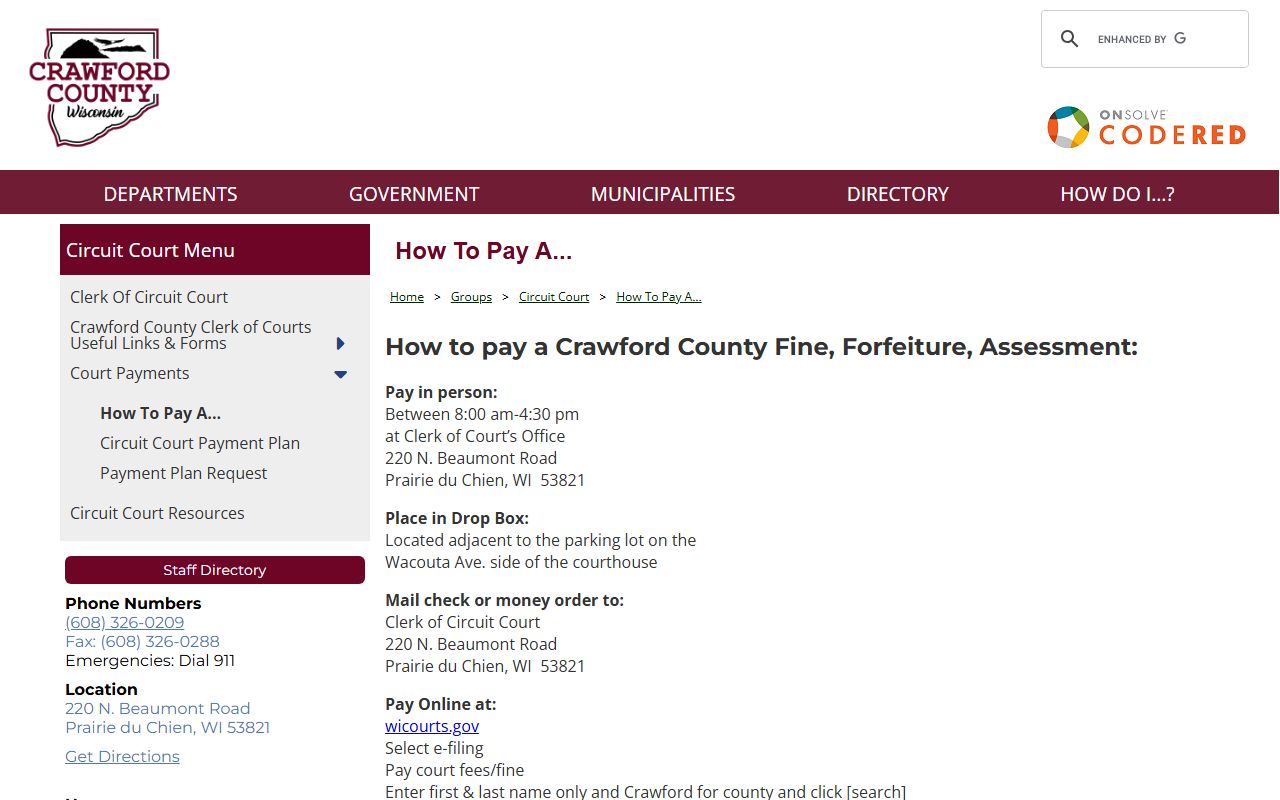
That image fits the payment side of a traffic matter, where the citation, the record, and the money obligation meet.
The circuit court page gives the broader court context: Crawford County Circuit Court.
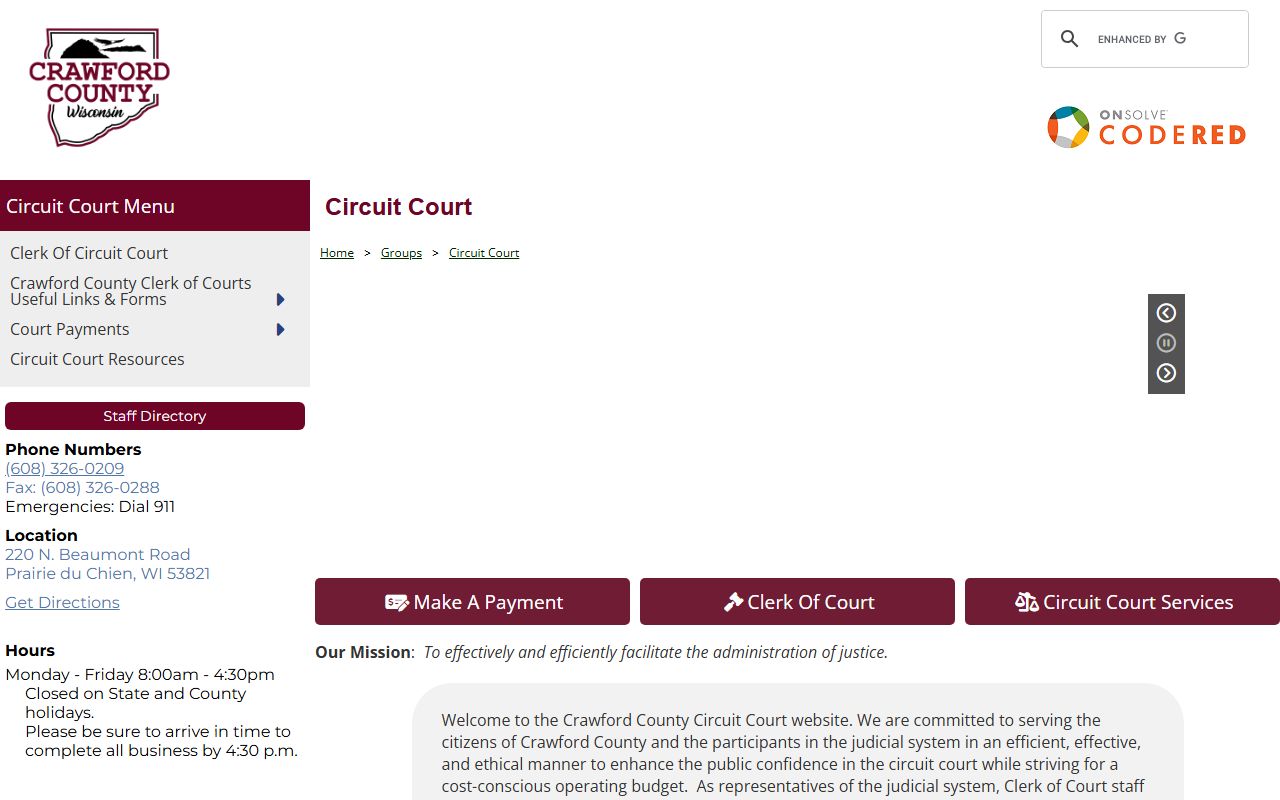
That image helps when you want to see how traffic work sits inside the county's public court services.
The eFiling page shows the county's electronic filing rules and conversion path: Crawford County eFiling Information.
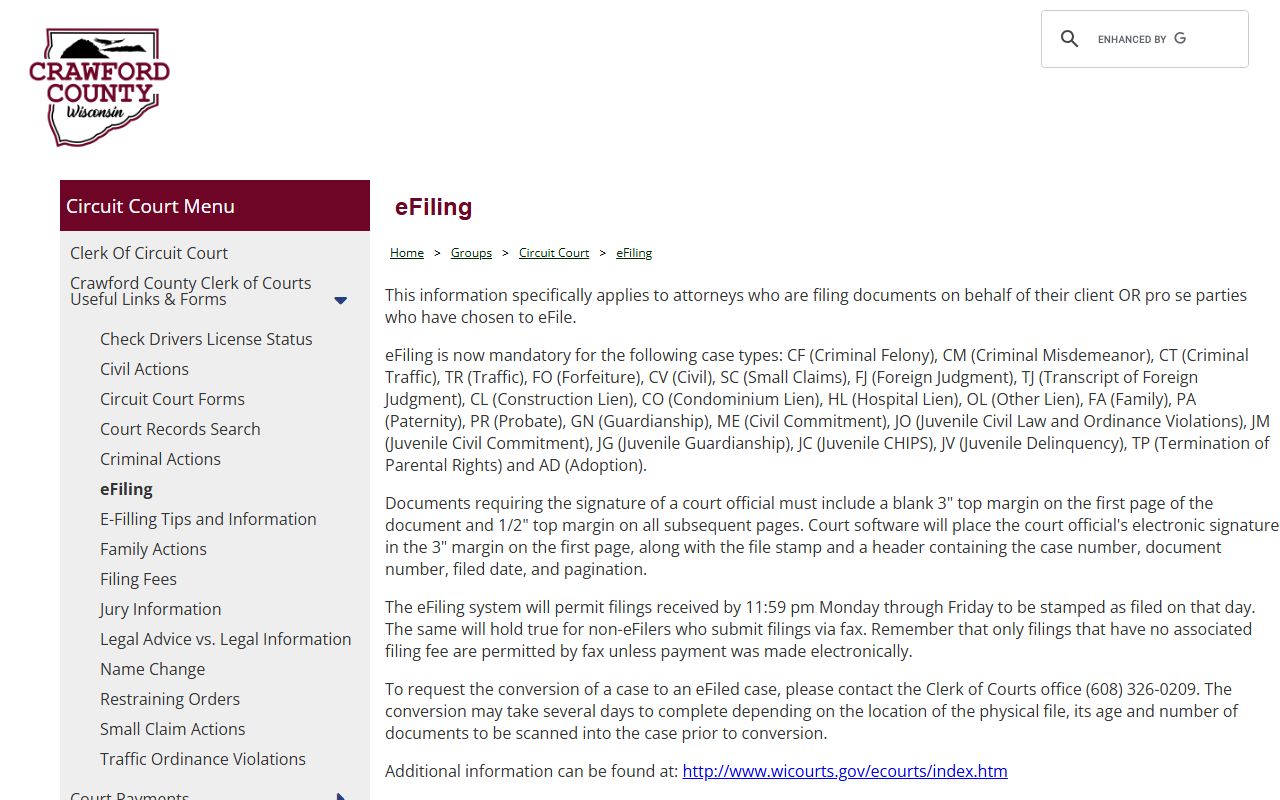
That image is the right match for the county's filing rules, deadline guidance, and format instructions.
Crawford County Court Services
Crawford County keeps the court service structure simple enough to use. The circuit court page says the office serves the public, legal profession, law enforcement, and multiple levels of government. That matters because traffic cases often involve more than one kind of user. A member of the public may want a record. A lawyer may need a filing. Law enforcement may need a court date. Crawford County makes room for all of that in one court office.
The clerk page and the circuit court page agree on one important point: staff cannot give legal advice. That boundary keeps the office useful. It means the staff can tell you where the file is, what the payment path looks like, and how the process works, but they cannot step into your legal strategy. The county also points people to the Lawyer Referral Service, which is the right place to go when the issue moves beyond records and into legal judgment.
The office hours also matter. Both pages say the office is open Monday through Friday from 8:00 a.m. to 4:30 p.m. That makes planning easier when you need to call, pay, or visit in person. The county contact directory reinforces the same practical details by listing Holly Tanner at 220 N Beaumont Road in Prairie du Chien. If you need the exact office location, the directory gives it. If you need the office mission, the clerk page gives it.
Those pieces together make Crawford County Traffic Court Records manageable. The county pages give you the file office, the payment route, the filing route, and the contact route. That is enough to handle a traffic case without guessing where the work belongs.
Crawford County Records and Help
The county contact directory is the final check when you need the precise clerk contact for Crawford County Traffic Court Records. It names Holly Tanner and lists the office at 220 N Beaumont Road, Prairie du Chien, WI 53821-1405, with phone 608-326-0209. That confirms the clerk office used throughout the county pages and gives you the same office from a statewide directory. When a search, payment, or filing question needs a real person, that directory is the cleanest backup.
Because the clerk office manages all case records and collects money on court-ordered obligations, it is also the place where the traffic record and the payment question meet. That makes Crawford County different from a generic county page. The office is not only a records box. It is part of the justice administration flow, which includes the jury system, public support, and the record of all cases. When you understand that, the county pages make more sense.
If you need to move from records to legal help, the page points to the Lawyer Referral Service at 1-800-362-9082. That keeps the role of the clerk office clear. If you need to move from records to payment, the payment page gives the address, drop box, mail route, and online route. If you need to move from records to filing, the eFiling page gives the deadline, margins, and conversion instructions. Crawford County gives you the whole route in pieces, and each piece is official.
That is the main lesson here. Crawford County Traffic Court Records are easiest to handle when you treat the clerk office, the payment page, the circuit court page, and the eFiling page as one connected system. The county built those pages to work together, and the records search is better when you use them that way.